When I first moved to New Zealand, I thought it was going to be so much easier than moving to Spain.
As far as I was concerned, NOWHERE ON THE ENTIRE PLANET could have more red tape or be more difficult than Spain. And for the most part, I was right. New Zealand is not exactly a challenging destination, by any means.
First off, they speak English in New Zealand. Hey, I speak English too! How hard could it be?
Sigh. Really, I should know better by now, right?
It all started the first day I did laundry in my new house in Wellington. Or should I say my new “flat” since I am now in the Queen’s territory.
Pulling my clothes out of the washer, I asked my new “flatties,” “flatmates” aka roommates where I could hang them up to dry.
“Downstairs outside there’s a clothesline in the back of the house,” they told me, “and they’re pigs on the ground.”
Blinking, surely I heard them wrong. “Pigs? What do you mean ‘pigs’? Why are there pigs outside?” I asked.
Looking at me like I was insane, “PIGS! You know PIGS that you hang your clothes with. PIGS!” They all said in unison pinching their fingers together in motion.
“Oh my god, you mean PEGS.”
This was just the beginning of what would become a slippery slope downhill of me trying and failing to understand the New Zealand accent, slang and/or vernacular.
In general, I’d like to think I’m pretty apt at understanding other accents and languages. I’ve studied many languages and worked teaching and tutoring English. But sometimes, like with the case of the mysterious pigs in Kelburn Wellington, all understanding completely eludes me.
However, after much pushing and prodding, I finally say down and watched the epic New Zealand classic movie Boy, the other night, when I realized I only understood 2/3rds of what they were saying.
The only complicated thing about the New Zealand accent is the vowels, which I guess is a pretty big complication. They like to swallow the ends of words here, similar to southern Spain, and then of course there is the Great New Zealand Vowel Shift and somehow “e”s have become “i”s.
Ben is pronounced “bin,” “head” becomes “hid,” while “really” and “rarely” sound exactly the same. Talk about confusing.
When I first stepped off the proverbial boat in Auckland, it didn’t take long for me to start to pick up on different structuring and common phrases used throughout New Zealand. Many of them I was aware of as a native English speaker, and while they may not be common or the go-to phrase in America, I understood perfectly what was meant.
For example Kiwis love to say the word “heaps.”
“I’ve got heaps of work to do before I can go home.” “There are heaps of sheep in New Zealand.” “I missed you heaps.” You get the idea.
A little more advanced is “keen.”
“Are you keen to go to the cinema?” I’d hear from friends. “Sure, I feel like going to the movies,” I’d reply, stubborn in my effort to maintain my Americaness (someone has to).
But one of my favorite Kiwi-isms, as I like to call them, is New Zealand’s fondness for the word “ay .”
What, are we in Canada?
Here, they like to just stick it on the end of a sentence here or there, giving it a little life or flavor. Almost like a little question but not quite, opening the dialogue up for a confirmation or reply.
“That’s a really nice hat, ay.” “Wow, that southerly is blowing in strong, ay.”
The other day I caught myself saying “ay” at the end of the sentence. Crap, I’m going native.

Anywho, after months of making mental notes and attempting to compile a list of new kiwi vocabulary in my “hid” — read: head, here are my 20 favorite and most heard New Zealand words and phrases. Enjoy.
1. Sweet as
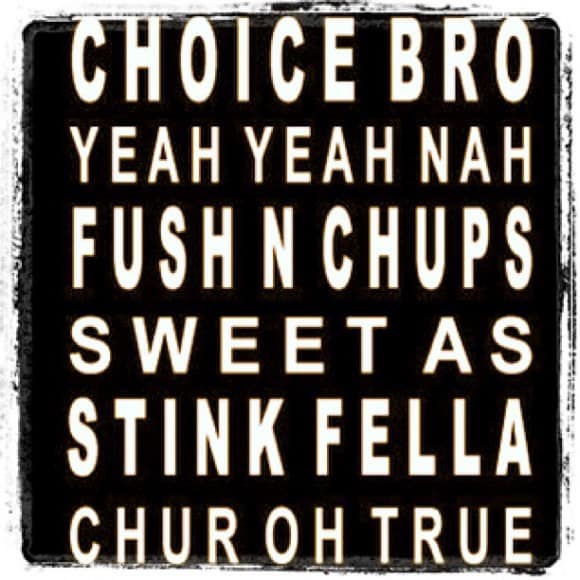
Quite possibly the most famous of kiwi expressions, “sweet as” means good, ok, cool. Whatever. An expression of affirmation, more or less, usually followed up with “bro.”
Sometimes living in New Zealand I feel like I’m transported to a California surfer town in the 90’s.
Though I absolutely refuse to say “sweet as” because it is grammatically incorrect and makes me want to punch a baby. Sweet as… what? Finish the damn sentence! Sweet as pie? Sweet as candy?
Oh and it doesn’t end there. You can pretty much get away with sticking an “as” at the end of any adjective here in New Zealand. Mean as. Cheap as. Or my personal favorite, beached as – see video below.
2. Kia ora
Kia ora is a Maori greeting that’s common in New Zealand nowadays. Literally meaning “be well,” it’s pretty much synonymous with hello. Though, I still feel like I can’t get away with saying it, no matter how hard I try.
3. Wop-wops
Ha, I nearly died when I heard this one the first time. The wop-wops mean the middle of nowhere. The boonies. Out in the sticks. Try saying that with a straight face.
I feel like I should add that New Zealand gives a whole new meaning to the wop-wops; I am of course referring to the fact that there are no people in New Zealand, well there are 4.4 million people, which is roughly the size of Boston or an apartment building in Shanghai.
I used to think the small town I grew up in Virginia was in the boonies. But noooooo. I mean I came across towns in the South Island, population 5, towns that if you blinked while driving through, you’d miss them.
So maybe wop-wops is more acceptable here.
4. Dairy
Kiwi word for the convenience store, i.e. the 24 hour shop on the corner where you can get your milk, eggs, or if you’re me, your midnight craving for a chocolate bar.
5. Chilly bin
Care to hanker a guess?
The chilly bin is a cooler in New Zealand, perfect for your barbies (BBQ’s) on the beach packed with ice cold beer. Favorite.
6. Chocolate fish
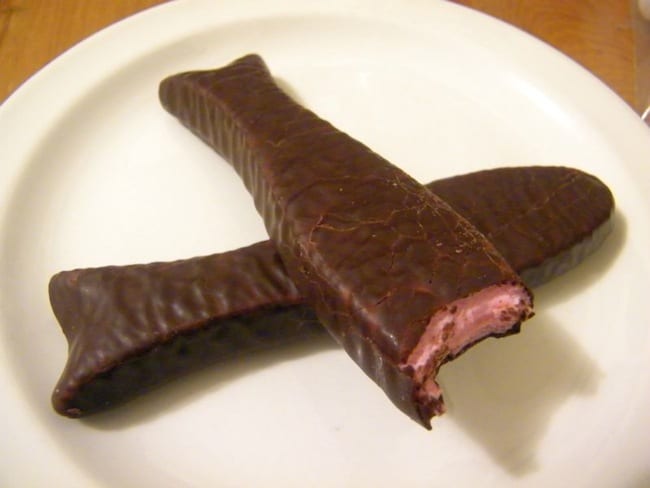
A New Zealand staple, the chocolate fish is basically a pink or white marshmallow shaped fish covered in chocolate with ripple-like scales on them.
It’s a pretty common word used for rewarding a kid or someone for doing a good job. And I can vouch they are delicious. Oh, and since it’s New Zealand, we say “fush.”
There is also an amazing cafe in Wellington called the Chocolate Fish Cafe right on the beach in Scorching Bay, which was popular with the Lord of the Rings cast when they lived in Wellington, though now the name’s changed and it’s called Scorch-o-Rama.
7. Book a bach
Bach (pronounced batch) is the kiwi word for holiday home, and pretty much the only affordable way to travel in New Zealand given the absurd costs of hotels, hostels and even some campsites here. Split one with a group of friends and it becomes cheap, and it’s actually a great local way to experience New Zealand.
8. Jandals, togs, and stubbies
Luckily I knew what jandals were before I arrived in New Zealand because my friend Cole’s blog is called Four Jandals. Prepared. Boom. Oh, jandals are flip-flops BTW.
Togs was more complicated. It took me a while to realize that togs mean swimsuit.
And stubbies, which I think I could have lived without NOT knowing or seeing. Short shorts for men in the 70’s, you still see them around town and they are shocking to behold, at least for Americans. We grow up with an appropriate short level in mind for men, which is often put to the test overseas where dudes like to bare more leg than what we yanks are accustomed to seeing.
Even though I don’t see too many short shorts out and about on the street, that does not include going to the gym or the beach where they are still quite popular. Shudder.
9. Chur bro
Another popular kiwi expression, “chur,” which as I’ve taken to understand it means cheers or thanks. Again, commonly followed up with the obligatory “bro.”
First really started hearing this from my tour guide with Haka Tours in the South Island.
10. Yeah nah
Yeah nah yeah nah, which is it GODDAMNIT?!
However, points must be awarded to the Kiwis for inventing a phrase that means both yes and no at the same time. Good on ya, mate! (another common phrase here which I *think* means well done amigo but I could be wrong).
11. Tramping
In New Zealand tramping means hiking; it does NOT mean engaging in drunken, slutty illicit behavior as one (ME) might initially be led to believe. You’re welcome for the clarification.

12. Kumara, capsicum, and feijoa
All food words completely stumped me when I first arrived. Nevermind the fact that New Zealand uses many a British word for food like rocket (arugula), chips (fries) and aubergine (eggplant) PLUS having their own words for things. Mildly confusing, especially at restaurants when I had to ask what something was, and I got a look that says are you stupid, you speak English. Ugh.
Kumara means sweet potatoes or yams AND they have purple ones here OMG! I’ve only ever seen orange sweet potatoes before coming to New Zealand. Tangent.
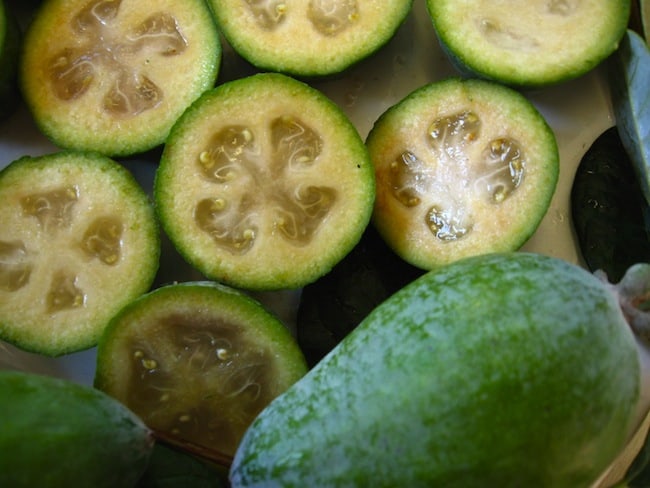
Capsicum means bell peppers while feijoa is a New Zealand fruit that is about the size of a tomato and has a tangy flavor – and feijoa takes amazing in juices and smoothies here, give it a try!
13. Skux
As I am led to believe, skux is an ironic word for a player in New Zealand. As you might have guessed, I have not been able to pull this off in casual conversation so far in Wellington. However, there is still time and I am optimistic.
Challenge accepted.
14. A mare
A mare is short for a nightmare, like “I was on the piss and got into some trouble; I had a bloody mare last night.” You know, because I can pull off saying something like that.
So basically having a bad time or if you end up in a crazy situation.
15. L&P
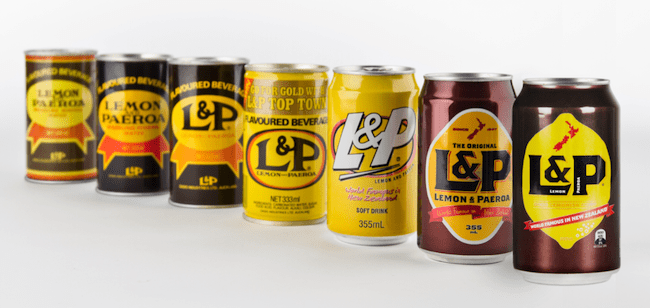
A New Zealand classic, L&P is a sweet soft drink meaning Lemon & Paeroa, Paeroa being the place where it was manufactured. It only took a day to grow on me, but it tastes like watered down fizzy lemonade, in a good way.
Just trust me on this.
16. Op shops
Thank you Macklemore for clearing this one up, i.e. the New Zealand word for “thriftshop,” extremely popular in Wellington with its thriving hipster culture and love for vintage and record shops .
17. Waikikamukau
Doesn’t really mean anything just means some random-ass town in New Zealand that’s pronounced “Why kick a moo cow” which makes me laugh ALL THE TIME.
Sorry, had to share.

18. Pack a sad
Pack a sad means throw a tantrum or become moody in New Zealand. Who knew I’d be so good at this one?
19. Pavlova
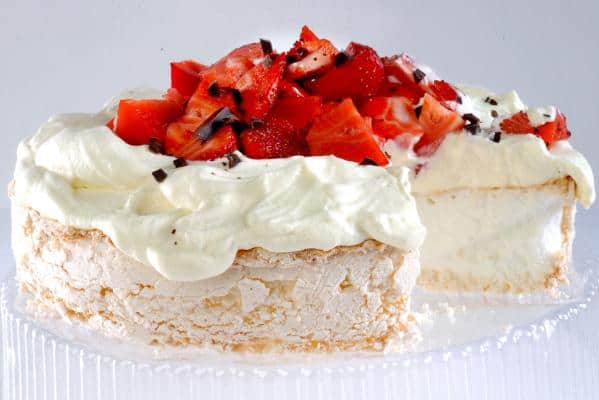
I had pavlova forced on me not long after moving to Wellington, and while I tried to like it, it is far too sweet to take more than a few bites. Basically it’s a meringue cake thing with cream and fruit on it.
However, what is vastly more entertaining is that Kiwis and Aussies fight to the death over the invention and ownership of pavlova. Just bring it up next time you’re around one or the other and see what happens.
20. Spin a yarn
“You’re spinning yarns mate” means you’re lying or exaggerating, or telling a long story.
I will take this opportunity to exert some self control and NOT make a sheep joke.
21. Bum bag
Bum bag means fanny pack.
22. Tu Meke
Tu meke is a Maori word that means “too much.” Nowadays it’s popular among youths as a response to something impressive or awesome.
23. Dave
Again, as I am given to understand Dave is used as one word reply usually to someone being a dick.
24. Gumboots
Gumboots are rubber rain boots or wellies. First time I saw this was out in the country at a convenience store where there was a sign that said “please leave your muddy gumboots outside.” Good thing there was an illustration.
25. She’ll be right
Things will be fine. Right as rain.
Ok spill. What are some strange words you’ve encountered abroad? Have you been to another country where your native language is spoken – what words did they use differently? Any kiwi lingo I missed? Oh, are you from New Zealand – and if so, who invented pavlova?
**FYI the title Me Talk Kiwi One Day is a play on David Sedaris’ famous book Me Talk Pretty One Day
About the author






One of the differences I’ve noticed between NZ English and US English is the way “quite” is used. In the US it’s a positively qualifier eg “it was quite good” means it was rather good. In NZ it’s the reverse – saying it was “quite good” would be more like “it was okay, but less than good”.
Good point!
[…] Read her blog HERE […]
I’ve been living in New Zillund for ten years now (I’m originally from Philadelphia). I too was bemused by the Kiwi accent when I first arrived. For instance, I remember thinking they were saying “sweet ass” when I first heard that expression.
In case you don’t know, a lot of Kiwi expressions are actually Trans-Tasman ones. I’ve heard more Aussies say “Yeah Nah” than Kiwis, for example.
As for the vowel shift, I actually think the Kiwis just drop their vowels altogether. Like instead of saying “fush and chups”, I reckon they say “f’sh and ch’ps”. Same with pegs. I’d say it was more “p’gs” than “pigs”. If you get the difference.
Also, one of my favourite Kiwi-isms is “a box of birds”, which is a way of saying you feel good/happy/cheerful.
Soon you’ll realise that you need to meet a broader range of Kiwis to appreciate the range of accents as well – the vowel swap and so on is not universal. The best way I’ve heard this put is the Dagg to Dougal spectrum – the range of pronunciation from Fred Dagg (comedian who did a send up of the iconic Kiwi farmer) to Dougal Stevenson (a very Queens English newsreader).
If you think baching it is the only cheap way to travel then you need to look at a wider range of options – if you want really cheap DOC campsites with a tent will only set you back a few dollars a night! Good to hear that you’ve taken up tramping – great fun and the word has gotten me some strange looks overseas. Abel Tasman is a brilliant intro to it, moderate distances and an awesome track…if you feel like really roughing it get someone reasonably experienced to introduce to the Tararuas just north of Wellington since you’re close to them.
Yeah I’ve been camping, but sometimes I’m surprised how much camping can cost here, same as a hostel. Absurd. I am trying to notice the difference in kiwi accents, so far I’m learning slowly but surely 😛 I was in Abel Tasman on New Years, so fun! I love all the hiking in New Zealand – nope, still can’t say tramping with a straight face yet 😀
http://doc.govt.nz/parks-and-recreation/places-to-stay/conservation-campsites-by-region/
Not much in the way of facilities, but dirt cheap and in some amazing spots. The other half and I did the Rees-Dart track over New Year’s, we’ve gotten old and respectable so find going bush a great alternative way to spend New Year’s Eve.
Thanks! That link was just what I needed!
Campsites aimed at the tourist and family trade are definitely more expensive, partly because they offer more facilities like an ablution block with flushing toilets and hot showers, a communal kitchen with microwave and oven, a laundry and so on. People with babies and small kids, especially, will pay for those conveniences, and I don’t blame ’em. But it’s also just price gouging, and the fact that if you have a really great location you can charge what you like.
DOC campsites are wonderfully cheap and often in truly beautiful locations, but very, very basic in facilities. You may need to bring your own drinking water, or boil/sterilise what’s available, and if there is a shower it’s most likely cold only, though some of the more popular campsites have been upgraded.
You can get a basic solar shower from the Warehouse for under twenty dollars and they’re brilliant. It’s a sort of pillow-shaped bag of thick plastic, one side clear and one side black, with a showerhead hose attached. You fill it with water, seal it and leave it lying in the sun, clear side up, for about three hours and you get enough nice hot water for a very satisfactory quick shower (best to wet yourself down then turn off the flow while you soap up, then turn it back on to rinse).
Sorry if you have those in the States too and I’m telling you what you already know.